
Welcome to ROYAL SMILE DENTAL CARE
Medical Attention You Can Rely On
Since our founding in 2017, ROYAL SMILE DENTAL CARE has been the Dental Clinic of choice in the Aligarh and surrounding area.
Dr. PIYUSH VARSHNEY (B.D.S ,FAGE MANIPAL ,MIDA,DUBAI HEALTH AUTHORITY APPROVED)experienced for more than10yrs.
DR. DEEPIKA GUPTA (B.D.S,PGDOI CHANDIGARH,MIDA ) experienced for more than 8yrs in the related field ,are the most renowned dental surgeon in the city .
At ROYAL SMILE DENTAL CARE, we offer patients all the attention and care they deserve in order to get them feeling healthy again. Swing by today!

OUR SERVICES
Complete Family Dental Health care
We believe in keeping our community healthy, and we’re committed to exceeding the expectations of our patients with cutting edge services. Let us provide you with the personalized care you deserve.
ROOT CANAL TREATMENT
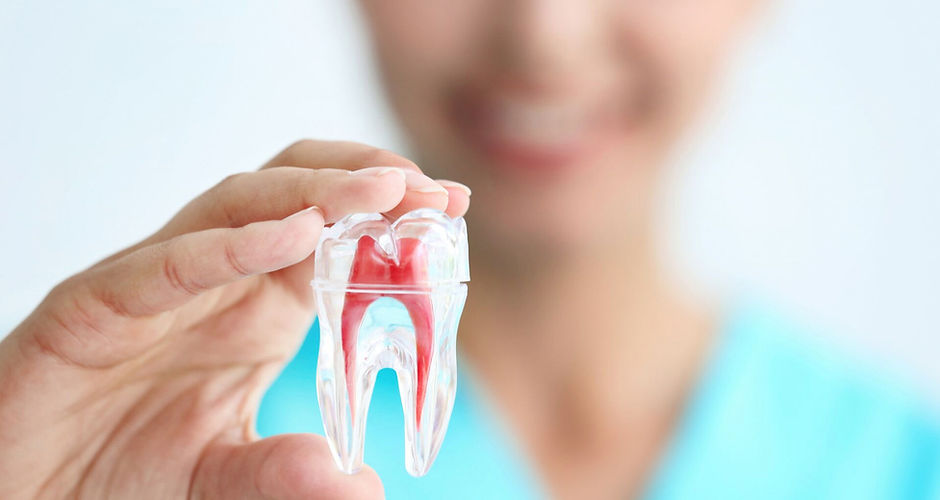
Root canal is a treatment to repair and save a badly damaged or infected tooth instead of removing it. The term "root canal" comes from cleaning of the canals inside a tooth's root. Decades ago, root canal treatments often were painful. With dental advances and local anesthetics, most people have little if any pain with a root canal. In fact, it's probably more painful living with a decayed tooth. Root canal alternatives include extracting the damaged tooth and replacing it with a dental implant, bridge or removable partial denture.

DENTAL SURGERY
Our professional team is here to guide our patients and their families every step of the way throughout their health journeys. Schedule this service today to ensure that you’re ready for what’s ahead.

PAINLESS TOOTH EXTRACTION,
Keep yourself and your loved ones healthy! Our friendly and experienced staff will make sure you always feel comfortable and well-informed. Schedule this service today or feel free to stop by anytime.

FIXED CROWN AND BRIDGES
Dental Bridge
As many of us know, when you have a missing tooth, it can be difficult to communicate, speak, bite or even eat effectively. When a tooth is missing, it is essential to visit your dentist to discuss the dental options for replacement.
Dental bridges are utilized in dentistry to replace missing teeth and provide a dental prosthesis that connects the adjoining teeth. The teeth on either side of the missing tooth are called abutment teeth and the replacement tooth is called the pontic (false tooth). The pontic teeth are usually made from gold, porcelain alloys, or a combination of materials. The anchor teeth (abutment teeth) can be your natural teeth or implants and they act as the main support for your bridge. Fixed bridges are strong and reliable and in most cases, they feel and look very much like natural teeth!
Dental Bridges have been an integral part of modern dentistry since the early part of the last century and prior to the use of dental implants was the preferred method for replacing missing teeth. Bridge technology is still viable and therefore we’ll be sharing some basic information and discussing the advantages (in certain cases), bridges can provide over dental implants. This is in lieu of the fact that dental implants are now the tooth restoration treatment method of choice for us and most dentists globally!
Some of the general advantages of dental bridges :
Dental bridges are usually small, lightweight, providing excellent chewing comfort
They correct and re-distribute the normal bite force, compromised by your missing teeth
Getting used to your new dental bridge is usually easy and comfortable
Controls shifting and moving of adjoining teeth
Only 2 – 3 appointments are needed to complete your bridge restoration
The longevity factor and general prognosis is good, if your hygiene and home care is maintained at a heightened level
IMPLANTS
Why would you need a dental implant?
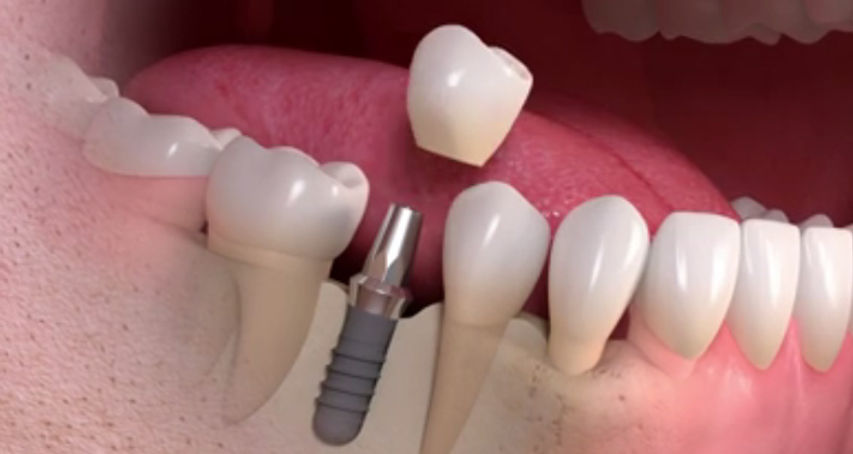
Dental implants can be used to replace a single tooth, several teeth, or all of the teeth. The goal of teeth replacement in dentistry is to restore function as well as esthetics.
When it comes to tooth replacement, generally, there are three options:
removable dental appliance (complete denture or partial denture),
fixed dental bridge (cemented), and
dental implant.
Dentures are the more affordable option for replacement teeth but are the least desirable because of the inconvenience of a removable appliance in the mouth. Furthermore, dentures can affect one's taste and sensory experience with food.
Dental bridgework was the more common restorative option prior to the relatively recent shift to dental implant treatment. The main disadvantage to bridgework is the dependence on existing natural teeth for support. Implants are supported by bone only and do not affect surrounding natural teeth. Deciding on which option to choose depends on many factors. Specifically for dental implants, these factors include
location of missing tooth or teeth,
quantity and quality of the jawbone where the dental implant is to be placed,
health of the patient,
cost, and
patient preference.
A dental surgeon examines the area to be considered for the dental implant and makes a clinical assessment of whether the patient is a good candidate for a dental implant.
There are great advantages to choosing a dental implant for tooth replacement over the other options. Dental implants are conservative in that missing teeth can be replaced without affecting or altering the adjacent teeth. Furthermore, because dental implants integrate into the bone structure, they are very stable and can have the look and feel of one's own natural teeth.

TOOTH COLOURED FILLING
What happens in a filling procedure?
Prior any filling procedure, your dentist will talk to you about your options to determine which filling type would be best suited and how to plan for them.
At your visit, local anaesthetic will be administered in the area to numb the tooth and surrounding structures. The decay will then be removed usually using a dental drill. Once the tooth is sound and strong tooth structure remains, the cavity is disinfected and dried before filling material is placed. The dentist will shape and cure the filling to harden it before checking your bite and ensuring it is comfortable. Each our patients are eligible for this personalized service. Schedule yours today, and we promise you’ll leave our clinic well-informed and confident that your health is in the best of hands.

BRACES AND ALIGNERS
Dental braces are appliances which are used to align or straighten the teeth and guide the teeth to the corrected position. They are made up of wires, brackets, and bands. Braces aid to correct irregular teeth positioning, jaw correction, improvement in chewing and smile aesthetics.We are here to guide you on treatment options and modalities depending upon dentition.

SMILE DESIGNING
Smile Design Treatment is a cosmetic treatment that focuses on improving the appearance of your smile through certain procedures such as dental veneers, composite bonding, teeth whitening and tooth implant. People suffering from dental problems like tooth decaying, tooth loosening, stains, and bacterial plaque usually opt for this makeover treatment. Some factors taken into consideration for this treatment include: facial appearance and skin tone, gum tissues and lips.
Some aspects that the smile design treatment encounters are: Tooth color- discolored or stained tooth may make you look aged and dull, while a well-shaped bright set of teeth leaves you with a perfect smile; Alignment and spacing- uneven broken, overlapping teeth or teeth which have gaps in between can be evenly aligned and straightened with the help of improved veneers; Missing tooth- in case of a missing or cracked tooth, the treatment provides tooth implantation which leaves you with a confident smile; Fuller lips, smile and cheeks- the treatment not only focuses on your teeth, but also makes your lips and cheek look good so that you get a perfect makeover look; Tooth proportion and smile line- in order to make your smile look flawless, the orthodontist or cosmetic surgeon would examine if your teeth are in correct proportion, or the imaginary smile line following the edges of your upper lips is in proportion with the curve of your lower lips.
WISDOM TOOTH REMOVAL
WHAT ARE WISDOM TEETH?
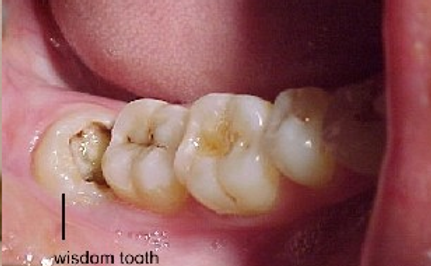
Wisdom teeth often known as third molars are the last teeth to erupt. One usually gets them in late teens or early twenties. However, even instances of eruption in late adulthood are common. If they erupt smoothly and without any interruption, then they can be proved as an asset. But the problem with third molars is that in case they do not erupt properly or are misaligned, they would need to be extracted. If they are poorly aligned, then they can damage the adjacent teeth.
WHAT PROBLEMS CAN A WISDOM TOOTH CAUSE?
It is also possible that wisdom tooth is impacted. This means that the wisdom teeth remain intact in the soft tissue and partially break or erupt through gums.
If they remain partially open, then the chances of bacteria entering the tooth are high which may cause infection & lead to the swelling in the jaw, pain and general illness.
Because of the misaligned positioning of the jaw, it will become difficult to brush or floss making the tooth prone to decay and gum disease.
There is 4 set of wisdom teeth two on each upper and lower jaw.
Nowadays majorly due to lifestyle changes people do not get wisdom teeth. This is because the jaws do not develop completely & properly which restrain the wisdom teeth to erupt.
IS THERE A NEED TO REMOVE WISDOM TEETH?
It is not necessary to remove wisdom teeth as long as they are not causing any problem. They would have to be removed if they are impacted or causing crowding. If you do not remove the wisdom tooth, it will be impacted. Your mouth might not provide space for it to erupt as a result it will erupt at the wrong angle which can damage the adjacent tooth.
Your dentist may advise you to remove your third molar at an early stage, this is because as you age the bones in your mouth becomes harder which will then make it difficult to remove.
Delaying can also lead to severe surgeries and heavy bleeding or can even cause a minor loss of movement in your jaw.
SYMPTOMS TO GET WISDOM TEETH REMOVED
Pain behind molars which can increase with time.
Redness, swelling, tenderness which can lead to infection
Foul breath, bad taste can also be detected due to wisdom teeth
Jaw pain and stiffness
SHOULD WISDOM TEETH BE REMOVED?
Wisdom teeth may/should be removed in case of any understated problems. Your dentist will be able to help and guide you with diagnosis:
Crowding: The adjacent teeth are getting harmed. Because of the misalignment wisdom teeth if erupts in the wrong angle then it can harm other teeth.
Jaw Damage: Wisdom teeth can damage your nerves making the jaw hollow.
Sinus Issue: Wisdom teeth can be a reason for sinus pain and congestion.
: It will be difficult to clean the area which results in swelling of the tissue.
Gaps in Gums: The pocket is created due to swollen gums thus helping in the process of decay

ADVANCED GUM TREATMENT
WHAT ARE GUM DISEASES?
Gum disease is an inflammation of the gum line that can progress to affect the bone that surrounds and supports your teeth.
Gum Disease also known as Periodontal Disease begins with bacterial growth in the mouth, the localized inflammation of the gingiva is initiated by bacteria in the dental plaque, which is a microbial biofilm that forms on the teeth and gingiva. Nearly 70% of the people are affected by this disease at some point in their life. Though such a prevalent disease most people are unaware of the issue and the problems it can cause.
CAUSES OF GUM DISEASE
The primary cause of Gum Disease is poor oral hygiene. If you are not brushing or flossing properly, then the chances of bacteria build-up are high. However, there are other reasons as well such as:
Smoking or
which makes difficult for gum tissues to repair
Consuming certain medications (
, steroids, anticonvulsants, calcium channel blockers, and chemotherapy) lessen saliva flow that protects teeth and gums. Some medicines even cause the abnormal growth of gum tissue.
Crooked or misaligned teeth
Hormonal changes such as puberty, menstruation, menopause, pregnancy etc. can make your gums sensitive and as a result prone to gum diseases.
Certain illness such as cancer and HIV make your immune system weak are at higher risk of developing gum disease. Also, people who are
are more prone to get Gum Disease.
Genetic susceptibility such as family history can contribute to gingivitis
SYMPTOMS OF GUM DISEASES
Bleeding of gums when you brush or floss your teeth
Pulling of gums away from the teeth
Teeth loosening
Change in the way your teeth fit together when you bite (malocclusion)
Pus between teeth and gums
Pain while chewing
Teeth sensitivity
Tender, red or swollen gums
Ill-fitting partial dentures
Foul breath that doesn’t go away even after brushing
Deep space formation between gums and teeth

KIDS DENTISTRY
Kids Dentistry
We recommend a first checkup by 12 months old to make certain that teeth and jaw development are normal, and even more importantly so that parents and guardians know how to help their children be healthy from the start.
GUIDELINES FOR WORKING WITH CHILDREN
Parents/guardians are always welcome in the room
comfort is always our concern
parent / guardian consent and guidance are vital, before any procedure
FIRST VISIT
We recommend a first checkup by 12 months. A simple guide for when to schedule a first visit:
no longer than 6 months after first tooth is erupted
at least by 12 months old
as soon as possible if you have any queries
ORAL HYGIENE INFORMATION FOR YOUR CHILD
There is a significant value for early well baby dental checkups. In particular,checkups for very young children address many concerns including teaching adults how to care for their child’s teeth and gums, how to help their children learn to care for themselves, answering parents questions and concerns, and planning for future dental health.
CHECKUPS
Education and prevention are the cornerstones of our concern for the dental health of children. In addition to teaching parents and guardians about dental care for their child, checkups are an appropriate time to comfortably and easily evaluate:
how many teeth are present
are all teeth present
loose teeth if any
braces / bite evaluation
cavity check
check health of gums
habit evaluation
homecare / prevention
fluoride use
review diet
address adult’s concerns
teach adults how to care for child’s teeth
HOME DENTAL CARE TIPS
It is often difficult initially to brush your child’s teeth. They can really put up a struggle, screaming, kicking, crying, running away, not opening their mouths – every kid is different.
Healthy teeth and gums are so important to start out life with. We’ve often heard the value of choosing your battles with your children, and this is one to choose.
Remember that the initial challenge you face is actually more taxing on you than it ultimately is for your child.

DENTAL JEWELLERY
What is Tooth jewellery?
Tooth jewellery is an accessory which is placed on the front portion of your tooth. This style craze lets you express your individuality through your smile, making it more unique and fashionable.
Are dental jewellery permanent?
Teeth jewellery is gaining popularity and includes placing diamonds or gems on the teeth. The idea of flashing a red ruby or a blue sapphire only adds to the joy that is revealed through the smile. Tooth gems are colorful crystal glasses mounted on a thin aluminum foil which can be used on the teeth. Unlike body tattoos and piercings, there is no invasive procedure involved in dental jewellery placement and is therefore much safer. There is no drilling required, no pain, and hardly any extra maintenance after their placement. These gems or crystals can be placed even for special occasions and removed later. Schedulet his service today to ensure that you’re ready for what’s ahead.

PREVENTIVE DENTISTRY
Keep yourself and your loved ones healthy! Our friendly and experienced staff will make sure you always feel comfortable and well-informed. Schedule this service today or feel free to stop by anytime.
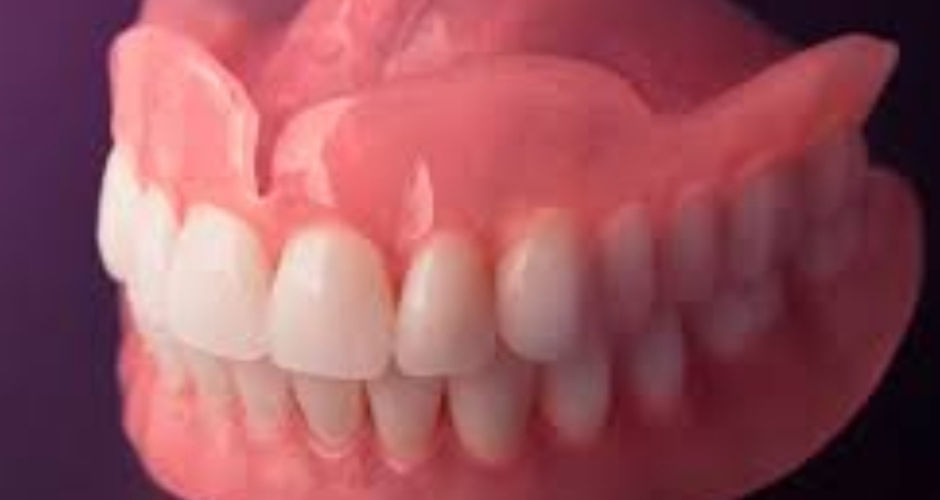
DENTURES
Dentures are removable false teeth made of acrylic (plastic), nylon or metal. They fit snugly over the gums to replace missing teeth and eliminate potential problems caused by gaps.
Gaps left by missing teeth can cause problems with eating and speech, and teeth either side of the gap may grow into the space at an angle.
Sometimes all the teeth need to be removed and replaced.
You may therefore need either:
complete dentures
(a full set) – which replace all your upper or lower teeth, or
partial dentures
– which replace just 1 tooth or a few missing teeth
Dentures may help prevent problems with eating and speech and, if you need complete dentures, they may also improve the appearance of your smile and give you confidence.
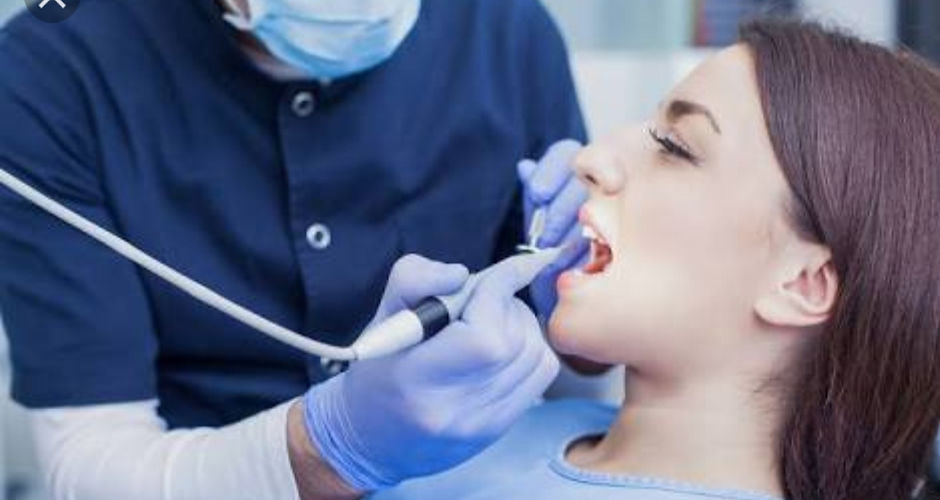
ULTRASONIC SCALING
Benefits of Ultrasonic Scaling
With the rise of ultrasonic scalers, we are better able to effectively, and completely, treat your gum disease and allow your gums to heal. The use of an ultrasonic scaler has numerous benefits:
• They are less painful that using a traditional scaling tool. Less trauma will be experienced by your already sensitive gum tissue.
• They are more effective at removing tartar buildup than a manual scraper.
• The spray tip allows us to clean your teeth of debris as we work. The sprayer can administer water or an antibacterial agent.
• Surface stains can be removed in the process, giving your teeth a whiter sheen.
• You spend less time in the dentist chair. With a shorter appointment, less of your time is taken up.
If you are suffering from gum disease, treatment is required.
Get in touch today and discover our warm and caring environment. Schedule a visit and let us know how we can help.
Opening Hours
Come Visit
Mon - Sat: 10am - 2pm ,5 pm - 9pm .Sun - 10am -3pmSunday evening closed.
Apply also for online prescription .
We’re here for you when you need us! Call us to schedule an appointment, or send us an email and we’ll get back to you as soon as possible.

See What Makes Us Different
SAFETY PROTOCOLS
During the time when the world is facing the Global Pandemic, nobody wants to venture out of their safety zone. The world will change, and we need to gear up and fight.
One way to do this is by ensuring we are in safest environment and that is exactly what ROYAL SMILE DENTAL CARE will provide you with. Out of all the healthcare services dentistry is the one where the Doctor is in closest contact with the patient.
So, here’s the enhanced list of safety measures ROYAL SMILE DENTAL CARE has adopted for combatting Covid-19 to ensure 100% sterile and safe environment for our Patients, Doctors & Staff.
-Formalin chamber
-Disposable gloves
-U.V light chambers
-Autoclave
-Disposable gowns
-Faceshields
-PPE Kits
-Disposable headcaps
On-Call 24/7
Keeping You Healthy
Convenient Location
Back to Full Health
Easy Appointment Scheduling
Quality Care That Lasts
Our Staff
DR. PIYUSH VARSHNEY
Dental surgeon B.D.S ,FAGE(MANIPAL),MIDA,DUBAI HEALTH AURHORITY APPROVED
MEMBER OF INDIAN DENTAL ASSOCIATION Experienced for more than 10yrs.
Skill, patience, and excellence are what Dr. Piyush Varshney brings to the table. Let Dr. Piyush Varshney manage your wellness and healthcare as our seasoned, veteran doctor.
DR. DEEPIKA GUPTA
Dental surgeonB.D.S,PGDOI(CHANDIGARH), MIDA Ex LECTURER KALKA DENTAL COLLEGE (MEERUT)MEMBER OF INDIAN DENTAL ASSOCIATION Experienced for more than 8ys.
A positive attitude and a motive of selfless service goes a long way with DR.DEEPIKA GUPTA .. Our doctors and medical staff are here to serve you — get in touch and take advantage of our wide range of services!.
FAQs
Healthcare Related Questions, Answered for You
What are the side effects of bad teeth?
Symptoms of tooth decay-
toothache – either continuous pain keeping you awake or occasional sharp pain without an obvious cause. tooth sensitivity – you may feel tenderness or pain when eating or drinking something hot, cold or sweet. grey, brown or black spots appearing on your teeth. bad breath.
Why are my teeth rotting even though I brush?
There are several reasons as to why your teeth are bad even after brushing them. Some of the most common causes include: not using the right toothpaste, not flossing, brushing too hard, and not brushing your teeth for a long enough time.
How do you stop receding gums from getting worse?
Regular checkups and professional cleanings, in addition to a solid daily brushing and flossing routine, may be the best prevention for receding gums. When gums recede, this creates pockets between the gums and teeth where bacteria can build up, leading to an overgrowth of plaque and tartar.